
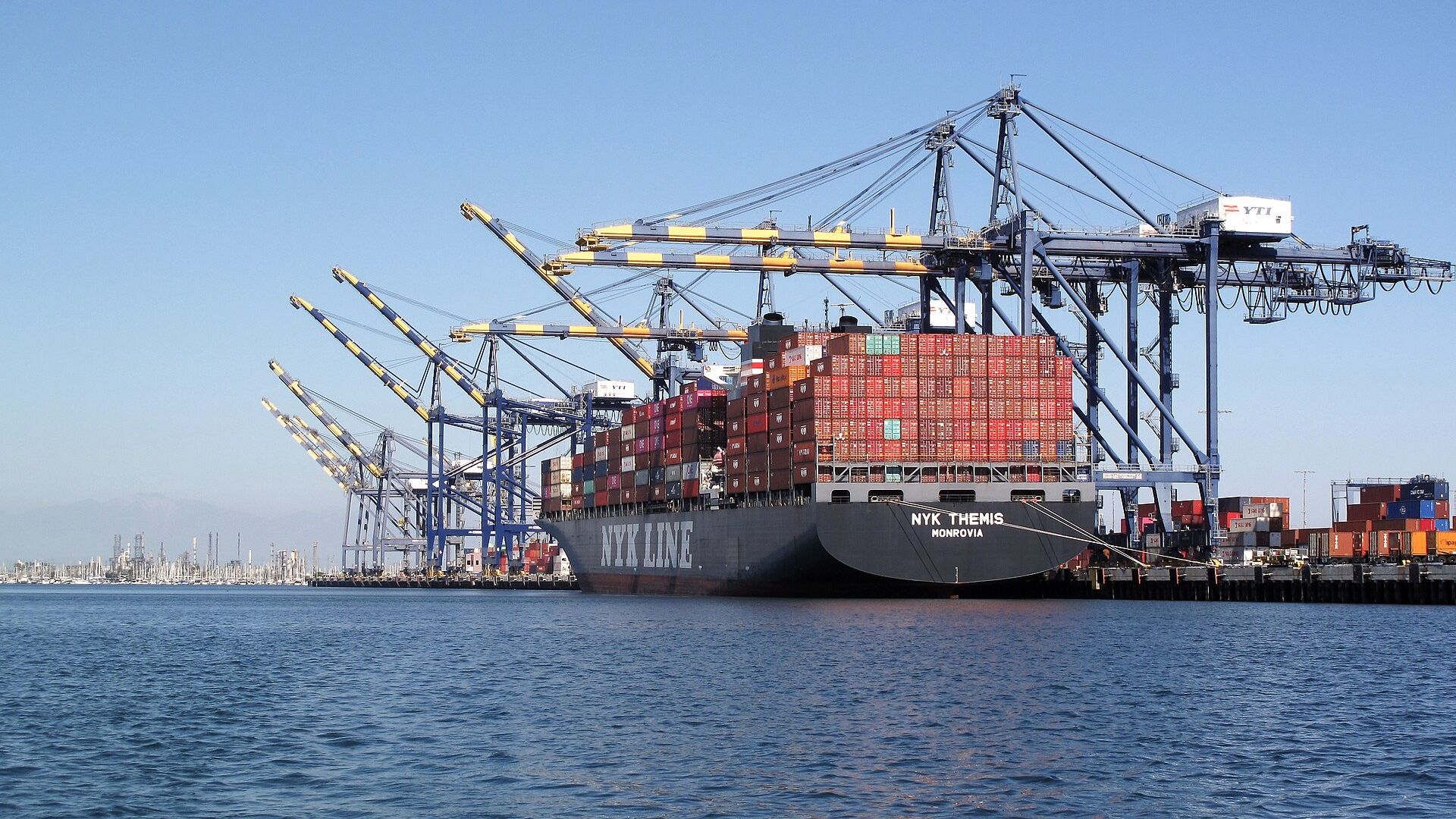
In 2025, the United States carried out one of the most major shifts in trade policy in several decades. According to estimates by Pablo Fajgelbaum and Amit Khandelwal, the average U.S. tariff rate rose from 2.4% to 9.6%, reaching its highest level in roughly eight decades.[1] As of August 2026, the higher-tariff regime remains in place.
The administration does not view this policy simply as a way to restrict imports. In its 2026 documents, the Office of the U.S. Trade Representative identifies several goals: supporting American manufacturing, reducing barriers to U.S. exports in foreign markets, and using access to the U.S. market as leverage in trade negotiations.[2]
This distinction matters. If tariffs ultimately encourage a trading partner to open its market to American products, their economic impact should not be judged solely by whether imports become more expensive. At the same time, announcing an agreement is not, by itself, the final result. What matters is whether these new opportunities translate into real and lasting growth in U.S. exports.
Suppliers Are Changing, but Production Is Not Always Returning to the United States
One of the clearest effects of the new trade environment is a change in the geography of U.S. suppliers. According to research by Laura Alfaro and Davin Chor, China’s share of U.S. imports declined significantly between 2017 and 2025, while the shares of Vietnam, Mexico, and Taiwan increased. The authors describe this process as a “great reallocation” of U.S. supply chains.[3]
This means that companies are reducing their dependence on a single country and looking for alternative suppliers. But shifting supply chains to other countries does not necessarily mean that production is returning to the United States on a large scale.
These are two different processes and should be treated separately. One represents diversification; the other is reshoring — the actual return of production to the United States.
For that reason, a decline in imports from a particular country cannot, by itself, be considered evidence that the U.S. manufacturing base is being rebuilt.
Why the Administration Views Tariffs as Economic Leverage
One of the strongest arguments supporters of tariffs make is the sheer size of the American market. The United States is one of the world’s largest consumer markets, and access to it carries major economic value. The administration argues that this advantage can be used in negotiations with trading partners to reduce foreign tariffs and non-tariff barriers facing American goods.[2]
Another part of this argument concerns the U.S. dollar's international role. Stephen Miran, who chaired the President’s Council of Economic Advisers in 2025, argued that steady global demand for the dollar keeps the U.S. currency relatively strong. A strong dollar makes foreign goods relatively cheaper for Americans while making U.S. products more expensive for foreign buyers.[4]
In Miran’s view, this is one factor causing persistent trade deficits and competitive pressure on American manufacturing. Economists do not universally accept this argument. Trade deficits are also influenced by capital flows, savings, investment, domestic demand, and many other factors. Still, Miran’s argument is important for understanding the administration’s economic logic.
Who Pays the Tariff?
One of the most important questions in evaluating tariffs is their actual cost.
According to a 2026 study by Gita Gopinath and Brent Neiman, the tariff increase that took effect in 2025 was passed through almost entirely into U.S. import prices.[5] In the baseline estimate by Fajgelbaum and Khandelwal, the pass-through was about 90%.[1] This means that foreign producers did not absorb most of the tariff cost by cutting their prices. The American importer pays the tariff at customs. The company then faces a choice: raise prices, reduce its own profit margin, or find another supplier.
A Federal Reserve Bank of New York study of small businesses found that about 80% of firms encountering higher import costs passed at least some of those costs on to consumers, while about 60% absorbed part of the cost themselves. Many companies used both approaches at the same time.[6]
This matters especially for small businesses. According to the study, a large share of small firms in U.S. goods and retail sectors rely on foreign inputs, while a much smaller share sell into international markets. As a result, tariffs often hit these businesses first through higher costs.
An American Company Does Not Always Mean American Production
In today’s economy, a company's nationality often has no direct connection to where it manufactures its products.
An American company may produce goods in Mexico, Europe, or Asia. At the same time, a product assembled in the United States may contain foreign-made parts, metals, electronics, or other components. As a result, the same tariff may protect one American manufacturer from foreign competition while making another American company’s production inputs more expensive. This is especially important for exporters. If tariffs raise a company’s production costs while its foreign competitors do not face the same burden, the American product becomes less competitive in international markets.
For that reason, when evaluating industrial policy, the key question is not only what we are protecting. It is also what we are making more expensive in the process.
Pharmaceuticals Are a Good Example of Why Production Location and Final Price Are Not the Same Thing
The pharmaceutical sector illustrates this distinction clearly. According to FDA data, by 2025 about 53% of branded drugs and 69% of generic drugs used in the United States were manufactured abroad.[7] But foreign production does not automatically translate into lower prices for American consumers.
According to an international comparison by HHS/RAND, U.S. prescription drug prices in 2022 were, on average, 2.78 times higher than prices in 33 other OECD countries. The gap was even larger for branded drugs. At the same time, unbranded generic drugs were, on average, cheaper in the United States.[8]
This contrast shows that a product’s price is not determined solely by where the factory is located. Competition, patents, insurance systems, price-negotiation mechanisms, and manufacturers’ pricing policies all matter.
For the same reason, trade policy should be distinguished from pricing policy. Tariffs directly affect production and import costs, while the final price consumers pay shows a much broader set of factors.
What Happened to the Trade Deficit?
The 2025 results do not tell a simple story of success or failure.
The overall U.S. trade deficit in goods and services remained almost unchanged. The goods trade deficit, however, increased. That means there is not yet enough evidence to say that the higher-tariff regime has clearly reduced America’s goods trade deficit.
The first half of 2026 shows a more favorable picture: through June, the U.S. goods-and-services deficit fell 33.8% compared with the same period a year earlier, while exports rose 11.7%.[9]
But these figures also require caution. Monthly trade data remain volatile, and it is still too early to determine how much of the change is directly attributable to tariffs. BEA data also show that the average trade deficit for the three months ending in June remained higher than in the same period a year earlier.
For that reason, the more important signal will not be one or two months, but the trend over the next several quarters.
Can U.S. Export Growth Be Sustained?
If one goal of tariffs is to strengthen American manufacturing, exports will be one of the most important measures of whether that policy is working.
Historical experience shows that retaliatory tariffs might cause lasting damage to U.S. companies in foreign markets. A 2026 Federal Reserve study of European Union retaliatory measures found that the market share of tariff-targeted U.S. products in Europe declined and, in many cases, did not fully recover even after the barriers were removed.
The reason is clear: foreign buyers find alternative suppliers, sign new contracts, and establish new logistics networks. Once those relationships are in place, removing the tariff does not automatically restore the old ones. But another outcome is possible. If tariff-driven negotiations reduce foreign barriers to U.S. exports, American companies may gain new opportunities.
That is why the ultimate result should be measured not by the number of agreements announced, but by actual export growth.
How the New Trade Policy Is Affecting New York
For New York, trade policy is not simply a debate taking place in Washington.
According to the New York State Comptroller, in 2025 New York’s exports declined in nearly half of the countries with which the state trades. Exports to Canada fell by about $3.8 billion. Excluding certain categories of metals, the state’s exports were down by roughly $3.4 billion overall.[10]
These changes cannot be attributed entirely to tariffs. Exports are also affected by the dollar's value, foreign demand, global commodity prices, and conditions in specific industries.
But another factor is especially important for New York: tariffs do not affect only large international corporations. Small businesses that buy food, raw materials, equipment, auto parts, or other goods from abroad also feel the impact. In a regional survey of small businesses, tariff-related monetary difficulties were reported more frequently than the national average.[6]
That is why changes in trade policy do not stop at the port. Their effects move through transportation, warehousing, distributors, retailers, and ultimately consumers.
What Could Happen Next?
At this stage, a final assessment would be premature.
Three issues will be particularly important in the period ahead: whether the reallocation of supply chains turns into actual production in the United States; whether U.S. export growth continues; and whether companies can manage the additional costs created by tariffs without losing competitiveness.
For that reason, the success of the new trade policy should ultimately not be measured only by lower imports or higher customs revenue. A tougher standard is whether real production is increasing in the United States, whether productivity is improving, and whether American businesses can sell those products competitively in global markets.
Tariffs might be an effective industrial policy tool if the protection they provide ultimately translates into investment, productivity, and exports.
If those results do not materialize, and companies are left with higher production costs while consumers face higher prices, it will become much harder to justify the economic value of tariffs.
That is why the central question is not whether tariffs are high or low.
The real question is what the American economy gets in return.
References & Sources
[1] Pablo D. Fajgelbaum and Amit Khandelwal, “Tariffs in 2025: Short-Run Impacts on the U.S. Economy,” NBER Working Paper No. 35064, April 2026. DOI: 10.3386/w35064.
[2] Office of the United States Trade Representative, 2026 Trade Policy Agenda and 2025 Annual Report of the President of the United States on the Trade Agreements Program, 2026; and 2026 National Trade Estimate Report on Foreign Trade Barriers, March 2026.
[3] Laura Alfaro and Davin Chor, “An Anatomy of the Great Reallocation in US Supply Chain Trade,” NBER Working Paper No. 34490, November 2025, revised April 2026. DOI: 10.3386/w34490.
[4] Stephen Miran, “Remarks by CEA Chairman Steve Miran at the Hudson Institute,” April 7, 2025, The American Presidency Project.
[5] Gita Gopinath and Brent Neiman, “The Incidence of Tariffs: Rates and Reality,” Journal of Economic Perspectives, Vol. 40, No. 3, Summer 2026, pp. 123–144. DOI: 10.1257/jep.20251486. Earlier version: NBER Working Paper No. 34620, January 2026, revised February 2026.
[6] Will Aarons and Asani Sarkar, “Effect of Tariffs on U.S. Small Businesses,” Federal Reserve Bank of New York, Liberty Street Economics, July 9, 2026. DOI: 10.59576/lse.20260709.
[7] U.S. Food and Drug Administration, FDA PreCheck Pilot Program, “Program Background,” pharmaceutical manufacturing data as of 2025.
[8] U.S. Department of Health and Human Services, Office of the Assistant Secretary for Planning and Evaluation, in collaboration with RAND Health Care, “Comparing Prescription Drugs in the U.S. and Other Countries: Prices and Availability,” January 31, 2024. Analysis based primarily on 2022 data.
[9] U.S. Bureau of Economic Analysis and U.S. Census Bureau, “U.S. International Trade in Goods and Services, June 2026,” August 4, 2026.
[10] Office of the New York State Comptroller, “Economic Impact of Tariffs,” 2026.