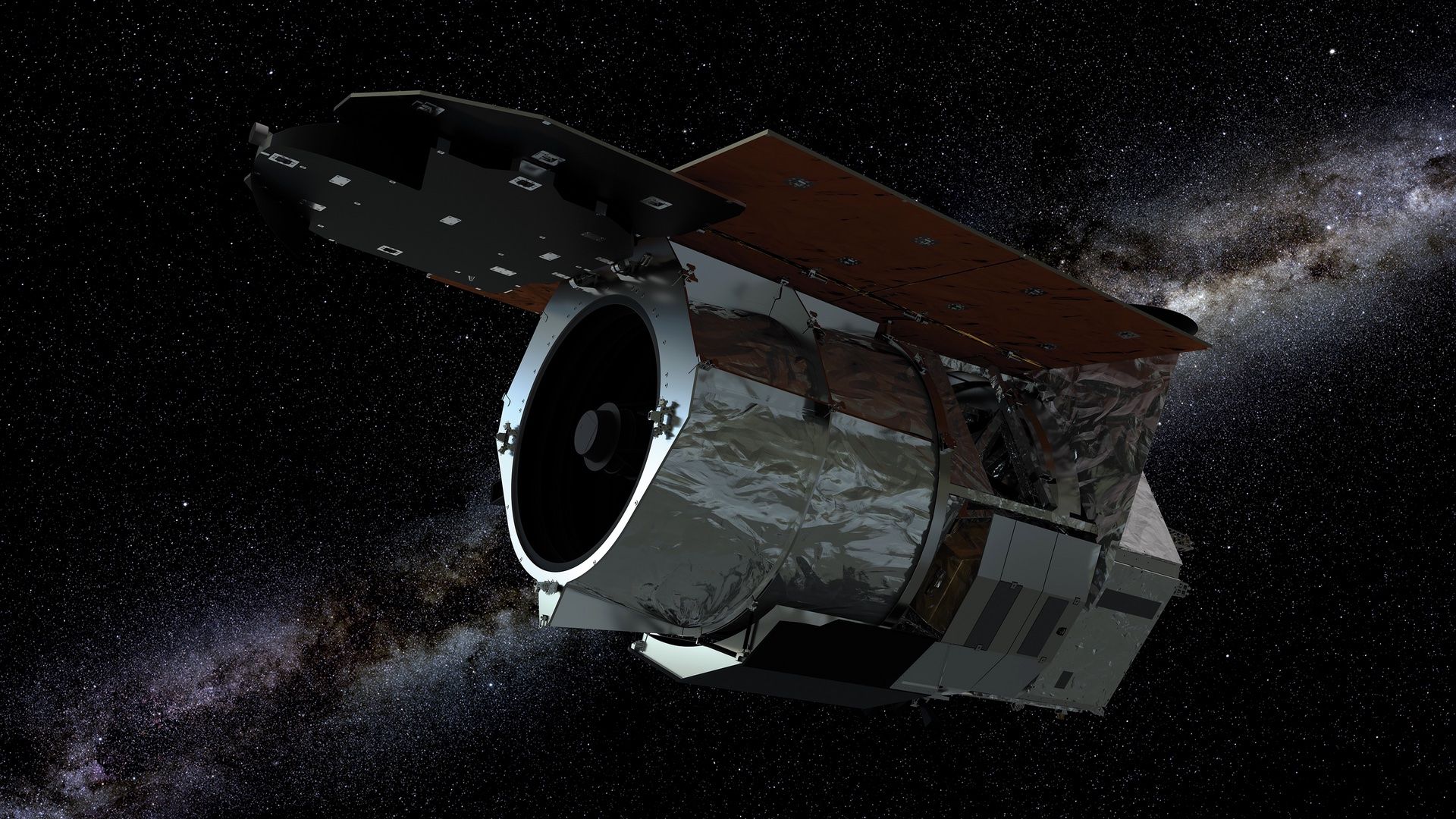
NASA's Nancy Grace Roman Space Telescope lifted off at 7:26 a.m. EDT Sunday from Launch Complex 39A at Kennedy Space Center in Florida, starting a five-year survey mission built around dark energy and dark matter.
A SpaceX Falcon Heavy carried it up. NASA's launch blog said the rocket's 27 Merlin engines produced more than 5 million pounds of thrust as it cleared the pad, with the observatory riding above the center core.
Roman is headed for the second Sun-Earth Lagrange point, known as L2, roughly 1 million miles out. The James Webb Space Telescope has worked from the same region since 2021.
Hubble is the usual comparison, and the numbers show why. NBC News reported that each Roman image covers a patch of sky at least 100 times larger than Hubble's, and that Roman can survey the sky about 1,000 times faster.
NASA said that reach will let scientists map billions of galaxies, hunt for planets around other stars and study black holes, producing large volumes of data every day for researchers to work through. NPR reported the mission should turn up more than 100,000 planets outside the solar system.
"What a glorious dawn launch," project manager Jackie Townsend said at a briefing shortly after liftoff, according to NPR.
The telescope carries the name of Nancy Grace Roman, NASA's first chief astronomer. She argued for observatories above Earth's atmosphere and for making their data available to any researcher who wanted it. She is usually called the mother of Hubble, though NASA credits her with driving the entire Great Observatories program.
The spacecraft did not begin life as a science instrument. NPR reported it was designed as a spy telescope for the National Reconnaissance Office and later donated to NASA.
Engineers built, integrated and tested it at NASA's Goddard Space Flight Center in Greenbelt, Maryland, the only NASA flagship mission handled start to finish at that center, the agency said. It traveled to Florida by barge in June, nine months ahead of schedule.