
As New Yorkers prepare for the 2026 elections, affordability, public safety, housing and development, healthcare, education, and transportation remain central issues in communities across Staten Island and Southern Brooklyn.
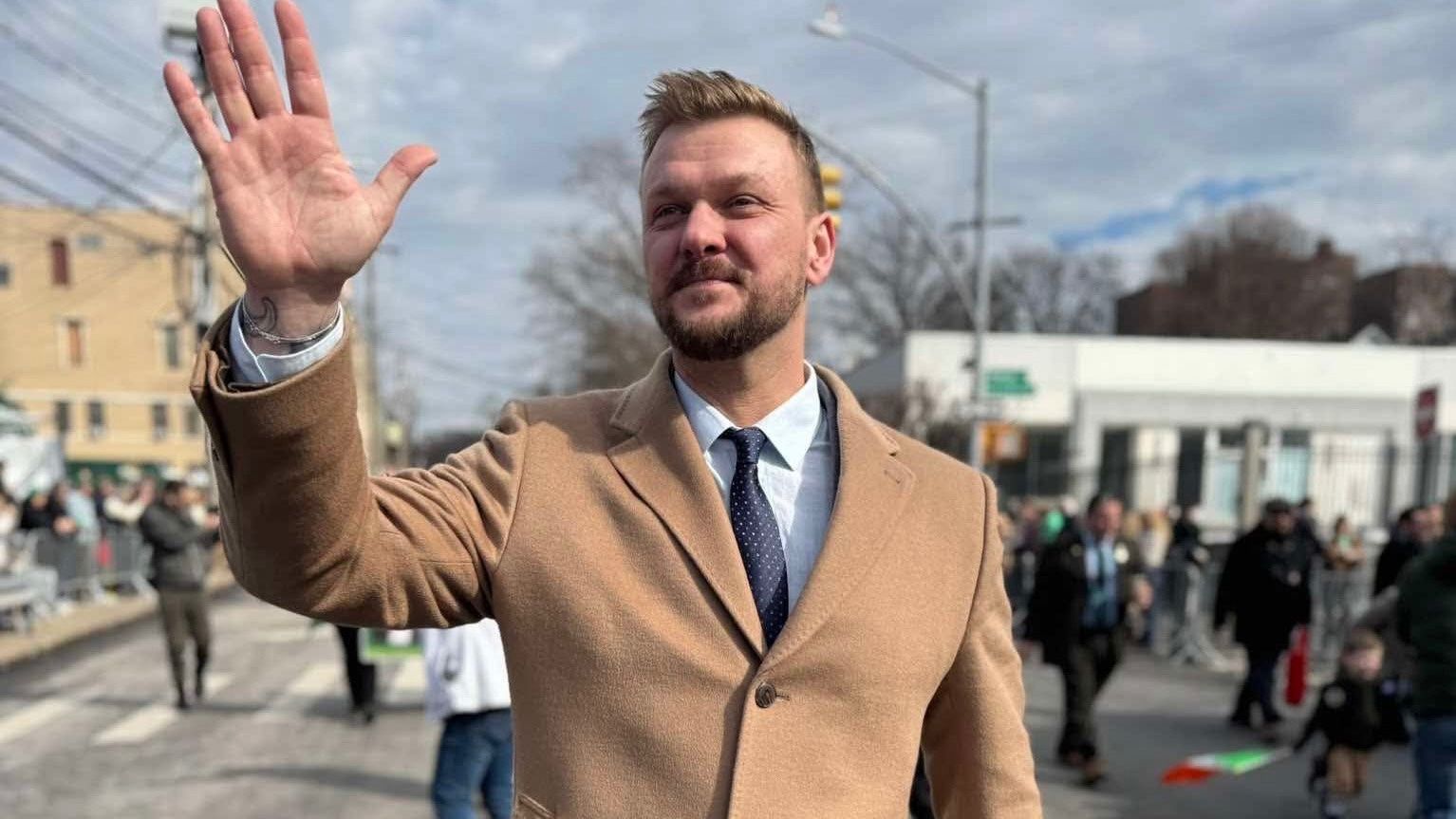
Ruslan Shamal, the Republican candidate for New York State Senate District 23, is seeking to represent a district that includes parts of Staten Island and Southern Brooklyn. The seat is currently held by Democratic State Senator Jessica Scarcella-Spanton.
In an interview with The Gazette New York, Shamal discusses the policies he would pursue if elected, from property tax reform and public safety legislation to healthcare, education, transportation, and development. He also addresses the practical challenge of advancing legislation as a Republican in a Senate currently controlled by Democrats and identifies what he sees as the most urgent issue facing residents of the district.
Q: You have identified lower taxes and public safety as two of your top priorities. If elected, what specific legislation would you seek to introduce or support in Albany to address those issues?
A: On taxes, I'd start with bills already written and already stalled. S.587 and S.3914 exempt tips and overtime from the state income tax. That's money in the pocket of every waitress and every guy pulling a double shift in this district. S.8461-A returns roughly a billion dollars in unspent climate-account funds to ratepayers, and S.8463 gives a one-year holiday from the taxes and surcharges buried in everyone's utility bill.
On public safety, the PROTECT Act, S.2282-A, would finally let a judge weigh whether a defendant is dangerous. It was killed in the Codes Committee this May, four votes to eight. I'd also back Senator Lanza's S.7241, which makes repeat car theft a felony and closes the Family Court loophole for 16- and 17-year-olds. Grand larceny auto is up 35 percent in the 120th Precinct.
Q: You have spoken about what you describe as an inequity in the taxation of co-ops. Why do you believe this issue has remained unresolved, and what specific changes would you propose?
A: Read the statute. Real Property Tax Law 1805 gives a one-to-three-family house a hard cap: assessments can't rise more than 6 percent a year or 20 percent over five years. A co-op with eleven or more units gets no cap at all. And Section 581 forbids the City from valuing a co-op on what the apartments actually sell for. It has to pretend the building is a rental. The City Comptroller calls that mandate "inherently regressive."
It's unresolved because fixing it creates losers in wealthier neighborhoods, and Albany doesn't like losers. Last year the Adams administration couldn't find a single legislator willing to sponsor a reform bill.
I'd support S.3213, which ends the comparable-rental mandate, and S.9416, which extends the assessment cap to co-ops under 35 units.
Q: You have said that residents of Staten Island and Southern Brooklyn are increasingly concerned about overdevelopment. Given that many zoning and land-use decisions are made at the city level, what specifically can a state senator do to influence development in the district?
A: More than people think. The 12.0 density cap that limited every residential building in this city wasn't a city rule. It sat in the state Multiple Dwelling Law, and Albany repealed it in the 2024 budget. That vote is what made City of Yes possible. This May, Albany exempted housing projects up to 250 units, 500 in denser districts, from environmental review entirely.
So the next fight is in Albany, not City Hall. I'd vote no on the REVIVE Act, S.9423, which forces by-right approval with automatic sign-off if a city misses a deadline, and no on S.3397-B, which lets developers override local zoning on religious-institution property.
And I'd use the state's own leverage. That environmental exemption is conditioned on adequate sewer capacity. We don't have it. Fund it first.
Q: You have also highlighted the financial pressure facing seniors living on fixed incomes. What specific tax relief, assistance program, or other policy would you advocate for, particularly given the state's budget constraints?
A: Here's a number every senior should hear. New York's property tax circuit breaker, the credit meant to protect people whose taxes outrun their income, cuts off at $18,000 of income and a home worth $85,000, and pays a maximum of $375. Those thresholds haven't moved in forty years. Claims fell from 517,000 in 1996 to 172,000 by 2017. There is not one house in this district worth $85,000.
Fix that first. It costs a fraction of what the state spends and it reaches exactly the people who need it. Then raise the senior homeowners' exemption, which Senator Lanza's S.7209 takes to $70,000, and raise the private pension exclusion, frozen at $20,000 since I was new to this country. S.7211 does that.
Q: Beyond taxes, public safety, and development, what are your priorities on healthcare, education, and transportation? Are there specific policies or legislative proposals you would pursue in these areas?
A: Healthcare: Richmond University Medical Center lost $27 million in 2024 and is openly looking for a merger partner. Across two rounds of the state's Safety Net Transformation Program, more than $2.6 billion in all, Staten Island received nothing. I'd fight for that money, and pass S.9388, requiring notice and community hearings before a hospital or a maternity unit closes. The Governor vetoed the earlier version in December after it passed the Senate 56 to 5.
Education: protect the Hecht-Calandra Act. S.5957 would scrap the specialized high school exam for "multiple measures." I'd oppose it, and support free universal test prep and more specialized seats instead.
Transportation: the North Shore Bus Rapid Transit finished environmental review in January 2024 and is still sitting in "planning" with about $34 million out of a $68.4 billion capital plan.
Q: Is there an existing New York State law or program that you believe is not working and that you would make it a priority to reform or repeal if elected?
A: The real property tax circuit breaker. It is, on paper, New York's promise that no one gets taxed out of their home. In practice, it's a dead letter: $18,000 income limit, $85,000 property value limit, $375 maximum credit, none of it adjusted since the 1980s. The program has quietly shed two-thirds of its claimants because the rules stopped describing anyone who actually exists.
That's worse than a bad law. It's a law that lets Albany say it's helping while helping almost no one. I'd rewrite the thresholds to track real incomes and real home values in New York City, and index them so we don't repeat this in another forty years. Senator Weik's S.3303 and Senator Gounardes's S.1147 are both starting points, and one is a Republican bill and one is a Democratic bill.
Q: If elected, you would serve as a Republican in a Senate currently controlled by Democrats. How would you build the bipartisan support necessary to move your legislative priorities forward and turn your proposals into law?
A: By reading the roll calls. The things that actually pass that chamber pass big. The hospital closure notice bill went 56 to 4. The class size extension went 60 to nothing. That tells you the majority isn't monolithic. It's cautious.
And on the issues I care about, Democrats are already out ahead of their own leadership. Senator Addabbo introduced a bill this April, S.10104, to make assault, menacing and reckless endangerment bail-eligible, co-sponsored by Sam Sutton, who represents part of southern Brooklyn. My own opponent co-sponsored a retail theft bill that's gone nowhere.
So my job isn't to give speeches. It's to be the twelfth vote those bills need, and to be somebody a Brooklyn or Queens Democrat can work with without paying a price for it.
Q: Aside from the partisan balance in Albany, what do you see as the biggest practical obstacle to implementing your agenda, and how would you address it?
A: The process itself. Almost nothing reaches the floor. Bills die in committee without a public vote. The dangerousness standard died in Codes. The Verrazzano toll exemption has been introduced three sessions running and has never left the Transportation Committee. And the real decisions get made in a room with three people and dropped into budget bills at two in the morning. This year's budget was 57 days late and passed on a message of necessity.
You can't fix that from the minority with a press release. What you can do is use the one moment of leverage everyone has, the budget, and refuse to trade your vote for nothing. And you can force the record: demand committee votes, so constituents can see who buried what.
Q: Of all the challenges currently facing Senate District 23, what do you consider the single most urgent problem, and why?
A: That the people who built these neighborhoods can no longer afford to stay in them. And I don't mean that as a slogan. There's a deadline on it.
The co-op and condo property tax abatement, worth between 17 and 28 percent of the bill for roughly 30,000 apartments in and around this district, expires June 30, 2027. As of today no one in Albany has introduced a bill to extend it. Separately, about 450,000 New Yorkers lost Essential Plan eligibility this July, and this district has a lot of them.
So a tax increase and a health insurance loss are both arriving by default, not by anyone's decision. That's what urgency looks like: not a debate we're having, but a bill coming due while nobody's watching.