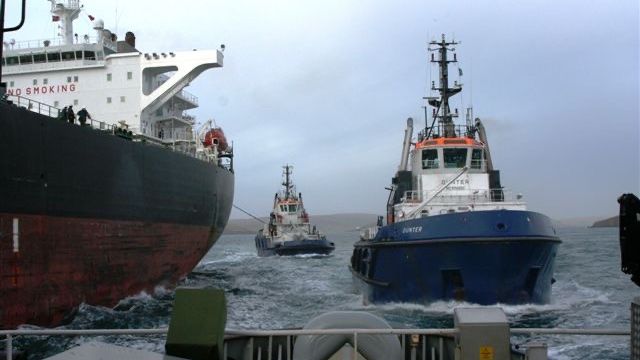
DUBAI, United Arab Emirates — The United Arab Emirates accused Iran of attacking two of its tankers in the Strait of Hormuz, deepening a standoff over the waterway as commercial traffic remained near the lowest levels since the war began.
Abu Dhabi National Oil Co. said two of its vessels were struck while transiting the strait Thursday evening and that no injuries were reported, according to The Express Tribune. The AP reported that the tankers were hit by drones while sailing outbound.
Vessel movements picked up slightly Thursday but stayed below the month's daily average of 12, according to figures from the trade intelligence firm Kpler. Nine ships transited the strait Thursday, up from five the day before. Before the United States and Israel attacked Iran on Feb. 28, roughly 130 ships passed through daily, a CNBC analysis of Kpler data found, meaning current traffic runs about 90% below prewar levels.
The two governments continued to offer irreconcilable accounts of who controls the passage. The newly appointed head of Iran's Basij paramilitary force said Thursday that the strait is under Iranian control and management. U.S. officials said the same day that the naval blockade of Iran could be sustained indefinitely and that Washington would increase economic pressure as ceasefire talks stall.
Trump said this week that the United States has total control of the strait. Iranian Foreign Minister Seyed Abbas Araghchi responded on X that Washington had long miscalculated because of intelligence failures, and called the strait an even larger miscalculation, CNBC reported.
Reuters, citing a senior Iranian official, reported this week that no progress had been made toward reviving the interim agreement reached in June. The official said mediators are discussing a U.S. return to the deal and a timetable for meeting its commitments, but that there had been no movement, and that Tehran was not entertaining an extension because Washington had abandoned the accord days after signing it.
Iran's top national security official, Mohsen Rezaei, said this week that the strait would not fully reopen until the United States meets Tehran's conditions, which include compensation for war damage, the lifting of sanctions and a permanent end to the fighting, according to the state outlet PressTV. Trump has countered that Iran should pay reparations.
Energy Secretary Chris Wright said oil exports through Hormuz have reached a seven-day average of close to 9 million barrels a day, with tankers moving under U.S. military escort, and argued that private trackers undercount transits because some ships move covertly. Gulf states are exporting roughly 15 million barrels a day when pipelines are counted, he said. About 20 million barrels a day of crude and refined products moved through the strait before the war.
Shipping risk has persisted elsewhere in the region. Kpler recorded 19 commodity vessels through the Bab el-Mandeb strait on Thursday, roughly flat from the previous day.