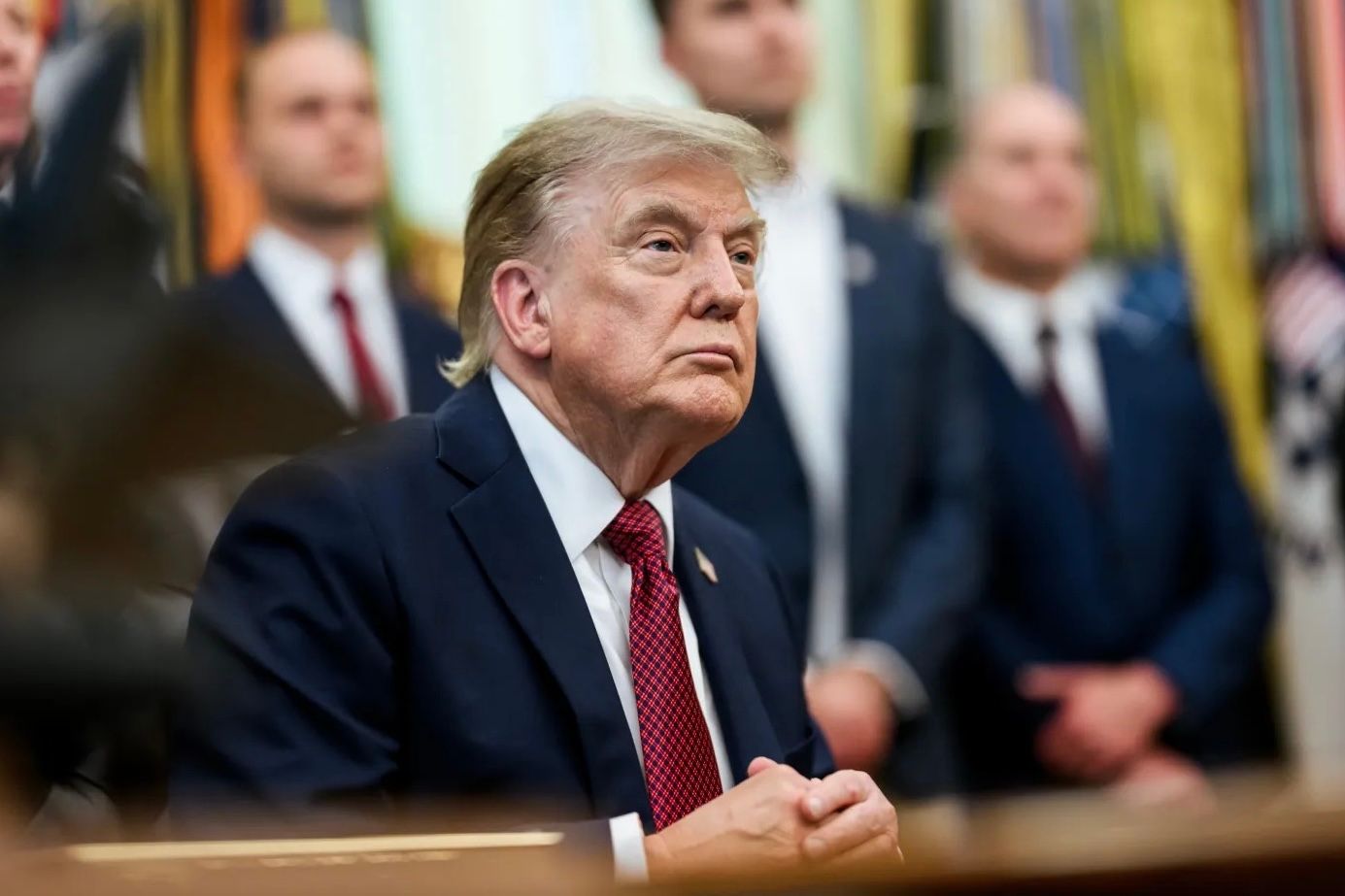
President Donald Trump on Thursday signed two executive orders targeting birthright citizenship in the United States — one aimed at outlawing what his administration describes as “birth tourism” and another seeking to narrow the criteria for who is eligible for birthright citizenship.
The new measures come after the Supreme Court struck down an earlier attempt by Trump to end birthright citizenship altogether through an executive order he signed on the first day of his second term last year.
One of Thursday’s orders specifically targets so-called “birth tourism,” a practice the administration describes as foreign nationals traveling to the United States with the intention of giving birth so their child can obtain U.S. citizenship.
Asked how the government would distinguish between a tourist and a “birth tourist,” White House Deputy Chief of Staff Stephen Miller said the Immigration and Nationality Act gives the president authority to impose such restrictions.
Miller cited Section 215(a) of the law, which states, in part, that it is unlawful for a noncitizen to enter or leave the United States “except under such reasonable rules, regulations, and orders” as the president may prescribe.
“If you're telling a consular officer you're here as a tourist, but your true purpose and intent is to go to a baby mill, give birth and try to mint an American citizen while you're here and you're committing a fraud against the American government,” Miller said.
“So that practice of birth tourism is, as of the signing of this order, hereby banned. And what that means is that no one in the world is any more allowed to obtain a visa for this fraudulent purpose,” he added.
Trump said that “hundreds of thousands” of people are taking advantage of birth tourism.
However, Solicitor General John Sauer gave a different response when the issue came up before the Supreme Court in April. When Chief Justice John Roberts pressed him about the scale of the practice during oral arguments concerning Trump’s Day 1 executive order, Sauer said, “No one knows for sure.”
Sauer cited “media reports” estimating the number at more than 1.1 million, or 1.5 million from the People’s Republic of China alone.