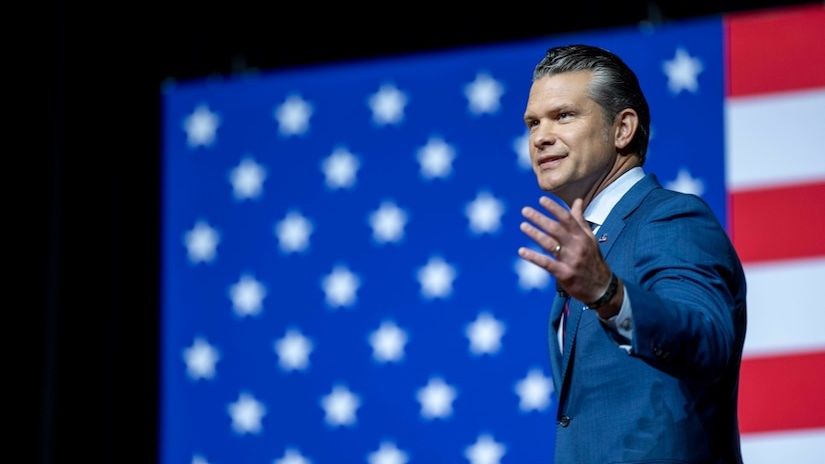
The Navy set out to sign 37,700 sailors in fiscal 2023 and finished more than 7,450 short. The Army ended the same year roughly 10,000 soldiers under target. The Air Force missed too, and afterward had to add 400 positions to its own recruiting corps simply to compete for young Americans. That was the baseline Pete Hegseth walked into.
Fiscal 2026 closes on Sept. 30. Every active-duty branch has already made its number, most of them by a comfortable margin and months ahead of the deadline.
The Air Force got there first. By mid-April it had commitments from more than 32,750 airmen, its full-year target, with the Space Force filling its 730 slots alongside it, Military Times reported. The Army followed in May, contracting 61,500 future soldiers against a goal of 61,000, four months early. Hegseth announced that one himself at the West Point commencement on May 23. The Navy closed the set at the end of June, reaching 45,000 sailors three months before the deadline, and it did so against a target the service had deliberately raised from 40,600, USNI News reported. The Marine Corps, which has not missed a year since 2005, hit its 26,600 over the winter. Pentagon officials told Military Times the five services had collectively delivered 103 percent of their combined active-duty mission.
None of this happened by slogan. It happened because somebody went through the pipeline and removed the friction. The Navy put more recruiters in the field, cut administrative legwork and simplified its tattoo approval process, Rear Adm. Jim Waters, who commands Navy Recruiting Command, told reporters. It raised its advertising and recruiting budget by 5 percent. The Army and Navy both leaned hard on pre-enlistment courses that let applicants who fall short on fitness or academics fix the problem before they sign, rather than being turned away for good. Pentagon spokesman Sean Parnell credited improved medical screening. The Air Force rebuilt how it trains recruiters. Hegseth stood up a recruitment task force. These are dull, unglamorous fixes, which is precisely why they had gone unmade for years.
The result is a problem worth having. Testifying to the House Armed Services Committee on April 29, Hegseth said the services were now turning away qualified applicants for budget reasons and asked Congress to fund an expansion of 44,500 troops. The fiscal 2026 defense authorization signed by President Donald Trump already adds about 26,100: 11,700 more soldiers, 12,300 more sailors, 1,500 more airmen and 600 more guardians.
A defense secretary controls less than most people assume. He does not choose the wars, he rarely sets the budget he wants, and history judges him on decisions made in rooms he was not always in. What he does own is whether the country can still persuade its own young people to serve. Three years ago the answer was slipping. Hegseth was handed that number, and the number moved.