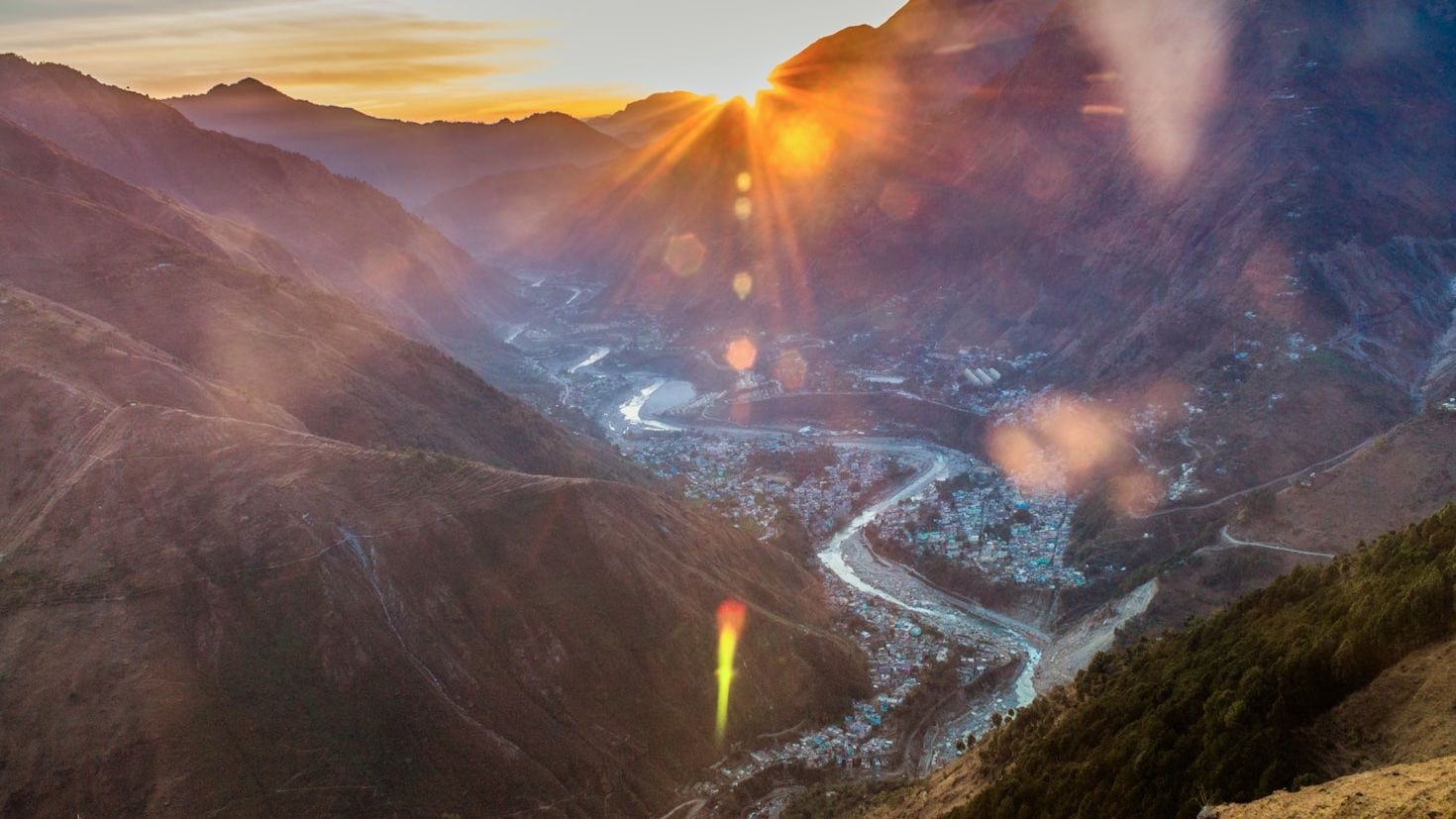
Rescue crews in Nepal drilled into mud-choked hydropower tunnels Tuesday in an effort to reach hundreds of workers still missing a week after a collapsing glacier sent a wall of water, rock and ice down the Trishuli valley.
Nepal's National Disaster Risk Reduction and Management Authority put the national death toll at 987 in an update Tuesday morning, with 3,916 people missing and 11,814 rescued, CNN reported. Chinese authorities said Monday that 16 people had died in Gyirong County in Tibet and 546 were missing there, according to Al Jazeera. Together the two tolls have passed 1,000, with more than 4,400 people unaccounted for.
The Independent Power Producers' Association, Nepal, says about 900 workers are missing at 12 hydropower projects across the Rasuwa and Nuwakot districts. Roughly 500 of them are thought to be inside tunnels. At the Upper Trishuli-1 project, still under construction, at least 576 people were listed as missing and around 300 were believed to be underground, association president Mohan Kumar Dangi told The Associated Press.
At the Trishuli 3A site, where 42 workers are listed as missing, crews have been digging about 15 meters down to reach a tunnel, army spokesman Brig. Gen. Raja Ram Basnet said. Soldiers broke into the upper section of one flooded tunnel over the weekend, pumped in air and sent a camera through, Al Jazeera reported, though rising river water halted the work overnight.
The tunnels are wide enough to drive a truck through, said Jakob Steiner, a geoscientist at the University of Graz, and rescuers have managed to get oxygen to some of the men. Food and water are the harder limits.
Nearly 300 hydropower workers have been rescued or made their own way out, officials said Monday. Four bodies were recovered from three tunnels over the same period, Nepal's army said.
Above ground, the scale of the disaster keeps widening. Authorities have begun burying hundreds of unidentified victims in a mass grave. Citizens of 38 countries are among the missing, including Americans. Reuters reported that South Korea will send a 44-member emergency relief team at Nepal's request, and Kathmandu has also asked India and China for specialist help.
The Rasuwa-Kerung road, Nepal's main overland trade route to China, has been destroyed, The Kathmandu Post reported.
The flood began Aug. 26 near the Tibetan border and traveled roughly 100 kilometers downstream, burying entire settlements. Casualty figures come from official updates issued Tuesday morning.