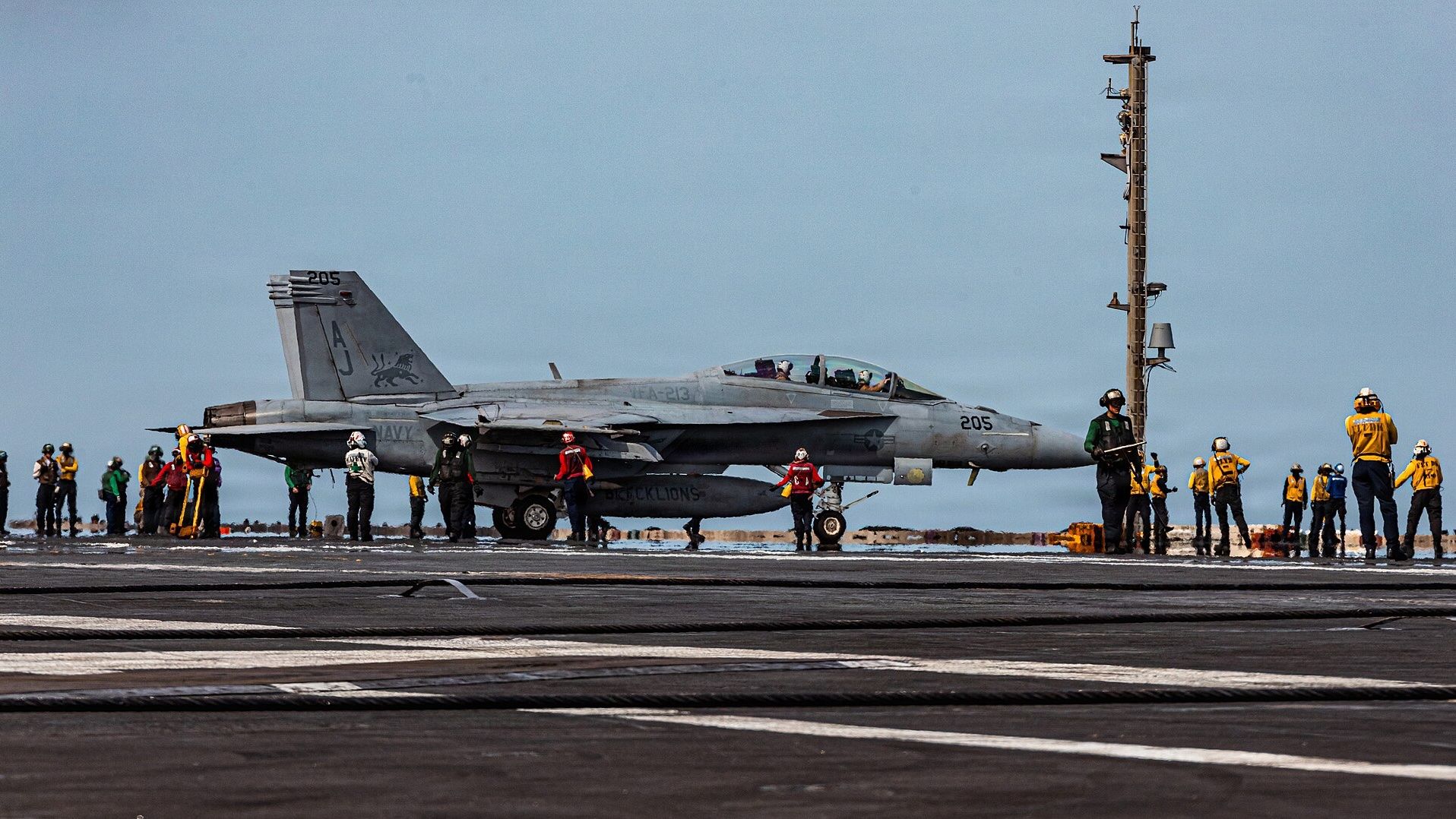
WASHINGTON — The Navy is studying whether it can move the command tower on its newest aircraft carriers farther forward, toward the middle of the ship, to satisfy President Donald Trump's preference for warships that resemble those of World War II, The Washington Post reported Saturday, citing seven current and former U.S. officials.
The multistory structure, known as the island, sits near the stern on Ford-class carriers. Trump has raised concerns about the appearance of the ships, and the review is a response to those complaints, the officials told the Post. They cautioned that the assessment is at an early stage.
A similar study during Trump's first term found that relocating the island would cost billions of dollars in redesign work and significantly delay the program, a former senior U.S. official told the newspaper.
Three officials said the current placement is not merely aesthetic. Positioning the island toward the rear leaves more deck space for aircraft to park near the catapults and reduces air turbulence for planes coming in to land.
The review would be the second major design change driven by the president. On Thursday, the White House issued a national security presidential memorandum directing the Navy to plan a return to steam-powered catapults and hydraulic weapons elevators on the USS Doris Miller, designated CVN-81, replacing the electromagnetic systems now installed. Defense officials have 60 days to submit that plan, including timelines and costs.
The memorandum said the Navy has suffered shipbuilding setbacks caused by overly complex designs and repeated design changes, and it said the administration intends to rely on proven and affordable technology, according to the Post. It did not address moving the island.
The Ford class has become a case study in the cost of new technology. The lead ship, the USS Gerald R. Ford, took 17 years to build, though the Navy has credited its electromagnetic catapult with strong performance in service. The Ford recently completed a lengthy combat deployment in the Middle East.
Three Ford-class carriers are in development or nearing delivery, with plans for as many as 10 more over the next four decades at a possible cost of $22 billion each, the Post reported.
A U.S. official familiar with both proposals said the Navy is treating them seriously because of the delays and cost overruns they could produce.