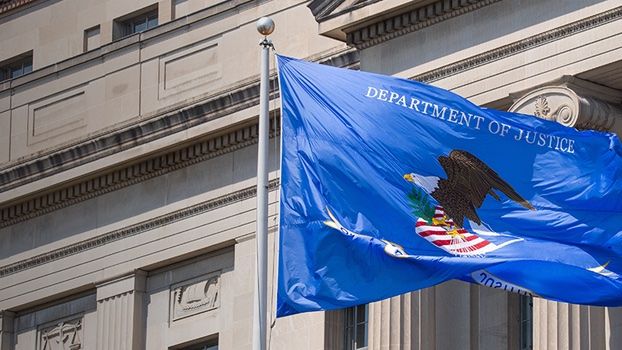
Attorney General Todd Blanche said Sunday that he would not pledge to act independently of the White House, and that President Donald Trump's views would factor into decisions about federal prosecutions.
Asked on NBC's "Meet the Press" whether the department would always operate free of White House influence, Blanche said, "No, I'm not going to pledge that," adding that no attorney general should ever make such a commitment, according to CNN.
Blanche argued that a blanket promise of independence would prevent the department from carrying out priorities set by an elected president. He offered the example of a presidential directive to pursue violent crime, saying an independence pledge would require him to refuse such an instruction.
Pressed on whether Trump should have a say in individual prosecution decisions, Blanche said he would take the president's view into consideration and that he expected any attorney general to answer the same way.
Blanche also disputed the suggestion that Trump directs specific cases, saying the president has never called him to demand a particular prosecution and never will, according to MSNBC. In a separate interview with "Fox News Sunday," Blanche said Trump welcomes disagreement from his advisers and expects candid counsel.
The remarks return attention to questions that dominated Blanche's confirmation. Trump's former personal defense attorney was confirmed by the Senate in a 50-49 vote and sworn in Aug. 10. Sens. Susan Collins, R-Maine, and Lisa Murkowski, R-Alaska, voted against him, with Collins saying his actions had further eroded the department's independence, Newsweek reported.
Sens. John Cornyn, R-Texas, and Thom Tillis, R-N.C., backed Blanche after he rescinded an order creating a proposed $1.776 billion "anti-weaponization" fund, which would have compensated people who said the Justice Department had unfairly targeted them. The fund drew bipartisan objections on Capitol Hill and was scrapped, according to The Hill.
The department under Blanche and his predecessor, Pam Bondi, has pursued cases against figures Trump has identified as adversaries, including former FBI Director James Comey and New York Attorney General Letitia James.
For decades, Justice Department leaders have generally sought to keep some distance from the White House on criminal investigations and charging decisions. Blanche has rejected that framing before, arguing in April, while serving in an acting capacity, that the president has both the right and the duty to shape federal investigations.