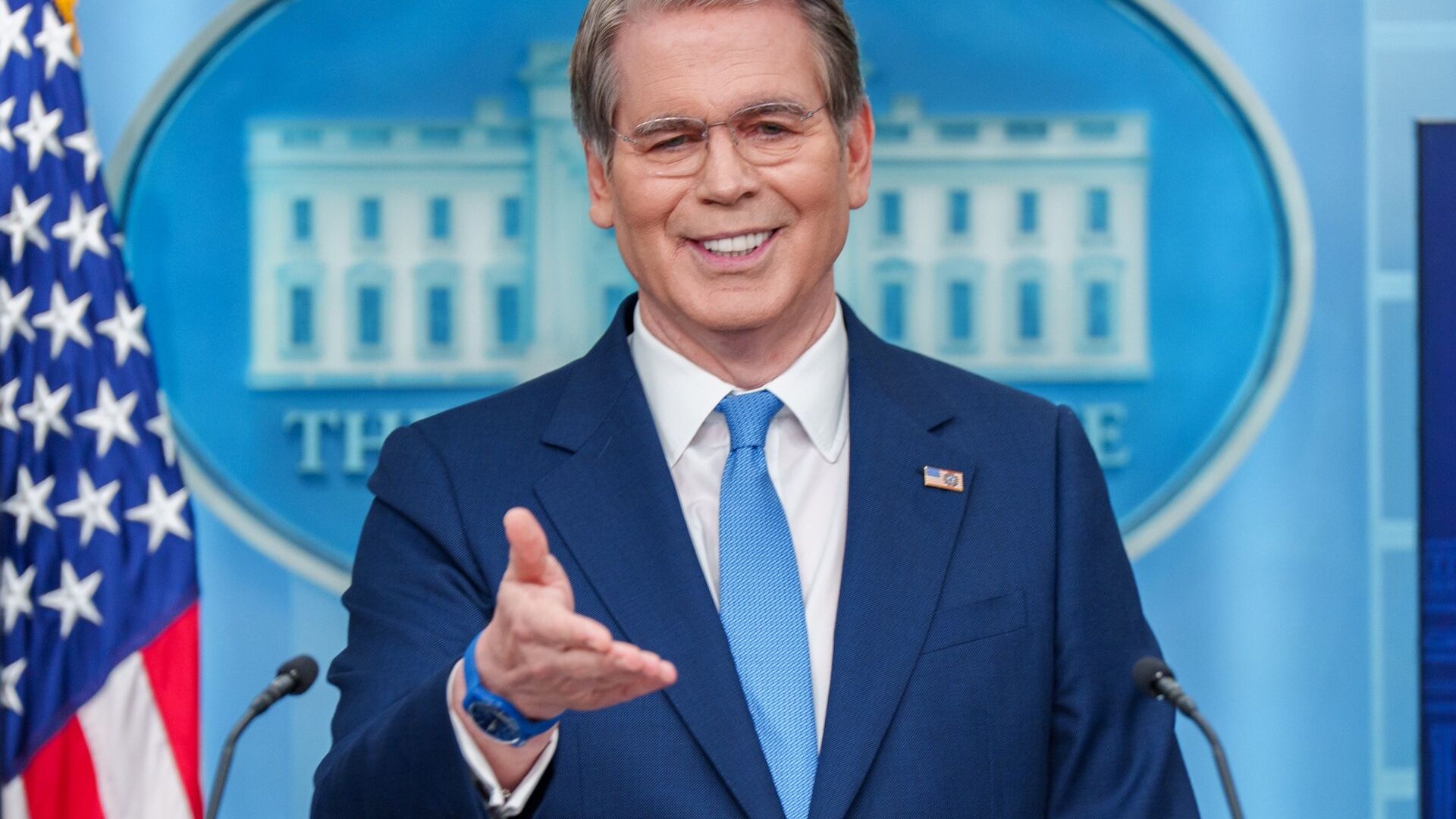
Treasury Secretary Scott Bessent said Thursday that the United States will impose the toughest sanctions in its history on Iran, describing an economic campaign designed to force the collapse of the government in Tehran.
The announcement came a day after President Donald Trump warned of economic warfare against Iran and threatened consequences for any country that offered Tehran financial relief. Bessent said he would detail the measures at a news conference Monday.
In an interview with CNBC, Bessent described the approach as a one-two punch that pairs the existing U.S. naval blockade with new financial penalties. "We are going to collapse this regime," he said.
Bessent also delivered a warning to other governments, saying the time had come for allies and the rest of the world to choose a side. "You are either with us or against us," he said, according to The Epoch Times.
Countries that continue to transfer money to Iran, purchase its oil or conduct ship-to-ship transfers at sea would face the full force of the Treasury Department, he said. Asked whether Washington would target China, Iran's largest oil customer, Bessent said some conversations were better held privately, but noted that China draws about half its energy from the Gulf and would benefit from a reopening of the Strait of Hormuz, according to Al Jazeera.
Iran's foreign ministry condemned the U.S. measures before Bessent spoke, calling them "economic terrorism" that would harm ordinary Iranians, according to Reuters.
The war between the United States and Iran began Feb. 28 and has disrupted shipping through the Strait of Hormuz for nearly six months. Trump imposed a naval blockade on Iranian ports in April, paused it in mid-June and reinstated it July 14.
A 14-point memorandum of understanding, brokered by Pakistan and signed June 17 by Trump and Iranian President Masoud Pezeshkian, opened a 60-day negotiating window that expired Monday without a wider agreement.
Oil prices rose Thursday to their highest level in more than three weeks following the U.S. threats, according to Reuters. Brent crude traded above $93 a barrel.